По Вашему запросу найдено 3145 записей
- Книга (6540)
- Газета (6293)
- Журнал (3209)
- Автореферат диссертации (360)
- Изоиздание (45)
- Аудиоиздание (471)
- Видеоиздание (374)
- Картографическое издание (24)
- Неопубликованный документ (360)
- Нотное издание (105)
- Фотография (666)
- Статья (2314)
- Библиографический указатель (427)
- Словарь (86)
- Календарь (6)
- Брошюра (133)
- Буклет (40)
- Игра (2)
- 3D-модель (51)
- Грампластинка (78)
- Веб-архив (1929)
- Не указан (9)
- Литературно-художественные издания (4426)
- Официальные издания (585)
- Научные издания (3145)
- Научно-популярные издания (1937)
- Информационные издания (10683)
- Справочные издания (207)
- Учебные издания (654)
- Производственно-практические издания (40)
- Массово-политические издания (1124)
- Изобразительное издание (703)

Количество страниц: 8 с.
- Общий отдел > Информационные технологии. Вычислительная техника,
- Краеведение. Археология. География. Биографии. История > Историческая наука. Историография > История Якутии > Якутия в годы Великой Отечественной войны 1941-1945 гг.,
- НАУКА ЯКУТИИ > ОБЩИЙ ОТДЕЛ > Информационные технологии. Вычислительная техника,
- НАУКА ЯКУТИИ > КРАЕВЕДЕНИЕ. ГЕОГРАФИЯ. БИОГРАФИИ. ИСТОРИЯ > Историческая наука. Историография > Всеобщая история > История Якутии.
Апросимов, Д. А. Разработка мультимедийного ресурса как средства передачи исторической памяти / Д. А. Апросимов, Ю. Н. Ермолаева // Вестник Северо-Восточного федерального университета им. М. К. Аммосова. Серия "История. Политология. Право". – 2019. – N 1 (13). – C. 5-11.

Количество страниц: 12 с.
Статья посвящена сюжетной структуре олонхо "Биэ уола Бэйбэлдьин Тулаайах" ("Сынкобылы Бэйбэлджин Тулаях") в исполнении сказителя Ф. С. Семенова–Кырса. Для понимания особенностей поэтики эпоса важное значение имеет рассмотрение характер-ных признаков сюжетосложения. Сюжетная структура олонхо состоит из: зачина, завязки, этапов развития, кульминации, развязки и заключения. Олонхо о богатыре Бэйбэлджин Тулаях имеет своеобразный, только ему присущий сюжет. Сюжет олонхо углубляется в представление различных миров – Верхнего, Срединного и Нижнего, каждый из которых играет значимую роль в судьбе главного героя. Эти миры не только создают богатый фон для событий, но и символизируют различные аспекты духовной и физической реальности, с которыми сталкивается герой. В сюжете подробно описываются испытания, через которые проходит главный герой. Победы над абаасы и спасения девушек айыы усиливают тему вечной борьбы добра со злом, что является основой для развития сюжета. Приобретают важность семейные и социальные связи, мотив преемственности и наследования. Открытие связей между героями в кульминации сюжета подчеркивает важность происхождения и рода как структурных элементов эпоса. Использование в сюжете мотивов сна и пророчеств служит важным инструментом для определения судьбы героя и его потомков. Это усиливает фаталистические элементы в эпосе, связывающие современные действия с историческим контекстом и будущим. Сюжет завершается повествованием о выполнении благодарственного ритуала, который подчёркивает взаимодействие человека с духовными силами природы и социальную ответственность перед ними. Жертвоприношение духам воды символизирует признательность и подкрепляет идею гармоничного сосуществования. В качестве основных методов использованы: метод сплошной выборки для сбора сюжетных мотивов; метод структурного анализ для изучения структуры сюжета.
The article is devoted to the plot structure of the olonkho “Bie uola Beibeldjin Tulaaiakh” (Orphan Beibeldjin the Mare’s Son) performed by the narrator F. S. Semyonov-Kyrsa. To understandthe peculiarities of the poetics of the epic, it is important to consider the characteristic features of plot structure. The plot structure of an olonkho consists of a beginning, a plot, stages of development, a climax, a denouement and a conclusion. Olonkhos about the bogatyr Beibeldjin Tulaaiakh have a peculiar plot, unique to them. The olonkho plot delves into the representation of different worlds: the Upper, Middle and Lower, each of which plays a significant role in the fate of the protagonist. These worlds not only provide a rich backdrop for the events, but also symbolize the different aspects of spiritual and physical reality that the hero encounters. The story details the trials that the protagonist goes through. The victories over the abaahy demons and the rescue of the Aiyy girls reinforce the theme of the eternal struggle between good and evil, which is the basis for the development of the plot. Family and social ties, the motif of succession and inheritance become important. The discovery of the links between the heroes at the climax emphasizes the importance of descent and lineage as structural elements of the epic. The use of dream and prophecy motifs in the story serves as an important tool for determining the fate of the hero and his descendants. It reinforces the fatalistic elements in the epic, linking contemporary actions to historical context and future consequences. The narrative concludes with the performance of a thanksgiving ritual that emphasizes man's interaction with the spiritual forces of nature and social responsibility to them. The sacrifice to the spirits of water symbolizes gratitude and reinforces the idea of harmonious coexistence. The main methods used were: the method of solid sampling to collect plot motifs; the method of structural analysis to study the structure of the plot.
Кононова, А. И.
Сюжетные особенности олонхо Ф. С. Семенова - Кырса "Биэ уола Бэйбэлдьин Тулаайах" ("Сын кобылы Бэйбэлджин Тулаях") / А. И. Кононова, Т. В. Илларионова ; Северо-Восточный федеральный университет им. М. К. Аммосова, Институт языков и культуры народов Северо-Востока РФ // Вестник Северо-Восточного федерального университета им. М. К. Аммосова. Серия "Вопросы национальных литератур". - 2025. - N 2 (18). - C. 53-64. - DOI: 10.25587/2782-6635-2025-2-53-64
DOI: 10.25587/2782-6635-2025-2-53-64
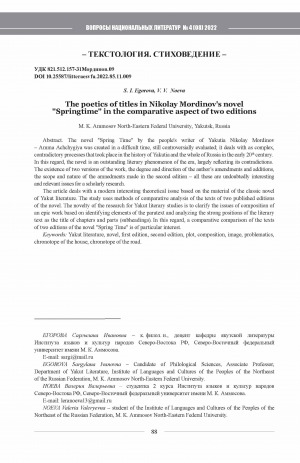
Количество страниц: 8 с.
Egorova, S. I. The poetics of titles in Nikolay Mordinov's novel "Springtime" in the comparative aspect of two editions / S. I. Egorova, V. V. Noeva ; Северо- Восточный федеральный университет им. М. К. Аммосова // Вестник Северо-Восточного федерального университета им. М. К. Аммосова. Серия "Вопросы национальных литератур". - 2022. - N 4 (08). - С. 88-95.
DOI: 10.25587/litteraesvfu.2022.85.11.009

Серия, номер выпуска: Грамота N 3
Количество страниц: 2 с.

Количество страниц: 10 с.
- Общественные науки. Образование > Этнография. Обычаи. Жизнь народа. Нравы,
- Языкознание. Филология. Художественная литература > Языкознание и языки. Лингвистика > Якутский (саха),
- НАУКА ЯКУТИИ > ЯЗЫКОЗНАНИЕ. ФИЛОЛОГИЯ. ЛИТЕРАТУРОВЕДЕНИЕ. ХУДОЖЕСТВЕННАЯ ЛИТЕРАТУРА > Языкознание и языки. Лингвистика,
- НАУКА ЯКУТИИ > ОБЩЕСТВЕННЫЕ НАУКИ > Этнография. Обычаи. Жизнь народа. Нравы.
The article focuses on the study of the language of "power" based on the speech forms of Tyghyn Darkhan, a historical figure of the Sakha people, conducted within the framework of ethnolinguistic analysis. The relevance of the research is determined by the need for an in-depth examination of the phenomenon of leadership in the national settlements of the Russian Arctic, as well as the analysis of grassroots perceptions of state governance. This study, based on Yakut folklore materials, contributes to expanding knowledge about the mechanisms of power and leadership in northern sociocultural contexts. The novelty of the study lies in its first-ever approach to analyzing the language of "power" through the lens of Yakut folklore, which allows for the identification of unique features of political discourse. This opens up opportunities to analyze rhetorical strategies, manipulative techniques, and mechanisms for achieving balance in relationships between power and society. The research aims to analyze the language of "power" through the speech forms of Tyghyn Darkhan to identify the ways leadership qualities were constructed and power relationships were established in traditional Sakha society. To achieve this goal, folklore sources related to the image of the hero were studied, key linguistic tools were identified, and their functional roles in political discourse were analyzed. The methodological foundation of the study includes descriptive, comparative-historical, semantic, and discourse analysis. Particular attention is paid to the interpretation of texts in their cultural and historical context. The results demonstrate that Tyghyn Darkhan's language played a significant role in consolidating his authority, fostering social integration, and regulating societal relations. His rhetorical strategies combined traditional and innovative approaches, highlighting his importance for understanding the mechanisms of power in ethnic communities. The findings make a substantial contribution to the development of ethnolinguistics and political anthropology. Future research prospects include extending the analysis to the linguistic practices of other northern peoples, which will deepen the understanding of the role of language in sociopolitical processes in Arctic regions.
Малышева, Н. В. Этнолингвистические особенности языка "Власти" на материале исторических и легендарных героев якутов / Н. В.Малышева ; Северо-Восточный федеральный университет им. М. К. Аммосова // Вестник Северо-Восточного федерального университета им. М. К. Аммосова. Серия. Эпосоведение. - 2024, N 4 (36). - С. 105-114. - DOI: 10.25587/2782-4861-2024-4-105-114
DOI: 10.25587/2782-4861-2024-4-105-114

Год выпуска: 1992
Количество страниц: 78 с.

Количество страниц: 14 с.
- Языкознание. Филология. Художественная литература > Литература. Литературоведение > Теория литературы. Изучение литературы. Литературная техника > Художественная литература на отдельных языках > Якутская (саха) литература,
- НАУКА ЯКУТИИ > ЯЗЫКОЗНАНИЕ. ФИЛОЛОГИЯ. ЛИТЕРАТУРОВЕДЕНИЕ. ХУДОЖЕСТВЕННАЯ ЛИТЕРАТУРА > Литература. Литературоведение.
Актуальность статьи обусловлена возросшим интересом к образам шаманов в современной фэнтези-литературе, особенно к женским персонажам-трикстерам, воплощающим архетипы медиаторов и носителей сакральной силы. Цель исследования – выявить и проанализировать особенности образов шаманок стихии огня в романах А. В. Борисовой "Земля удаганок" и Р. Ф. Куанг "Опиумная война", с учетом их символического, культурного и нарративного значения. Материалом для анализа послужили четырех-томный цикл А. В. Борисовой и трилогия Р. Ф. Куанг, а методологической базой–междисциплинарный подход, включающий герменевтику, мифокритику, семиотику и компаративистику. В исследовании используются концепции К. Г. Юнга об архетипах, идеи М. Элиаде о шаманской трансформации и классификация женских образов Ю. М. Лотмана. Архетипические особенности героинь, их связь с огненной стихией рассматриваются как символ трансформации, жертвы и власти. В результате выявлены два полюсных образа шаманок: Илинэ у А. В. Борисовой – гармоничный медиатор между мирами, воплощающий родовую память и духовное равновесие; Фан Рунин у Р. Ф. Куанг – разрушительная фигура, утратившая субъектность под влиянием архетипа огня. Обе героини иллюстрируют разные культурные трактовки шаманизма: якутскую как регенеративную, китайско-американскую – как апокалиптическую. Научная новизна заключается в сопоставлении образов шаманок разных культурных матриц, что позволяет выявить универсальные и локальные черты шаманского архетипа. Практическая значимость исследования определяется его применимостью в образовательной и научной деятельности по литературоведению и культурологии. Работа открывает перспективы дальнейшего изучения архетипических образов в межкультурной фэнтези-прозе. Кроме того, исследование способствует расширению научного диалога о трансформации традиционных мифологических структур в современной литературе.
The relevance of this article is due to the growing interest in shamanic figures in contemporary fantasy literature, particularly female trickster characters who embody archetypes of mediators and bearers of sacred power. The aim of the study is to identify and analyze the features of fire-element female shamans in the novels "The Land of the Udagans" by Ariadna Borisova and "The Poppy War" by Rebecca F. Kuang, considering their symbolic, cultural, and narrative significance. The material for analysis includes Borisova’s four-part novel cycle and the Kuang’s trilogy. The methodological foundation is an interdisciplinary approach in corporating hermeneutics, myth criticism, semiotics, and comparative literary studies. The study employs the Jung’s concepts of archetypes, Eliade’s ideas on shamanic transformation, and Lotman’s classification of female literary images. The archetypal features of the protagonists and their connection to the fire element are viewed as symbols of transformation, sacrifice, and power. The analysis reveals two contrasting shamanic images: Ilene in the Borisova’s work – a harmonious mediator between worlds, embodying ancestral memory and spiritual balance; and Fang Run in in the Kuang’s novels – a destructive figure who loses her subjectivity under the in fluence of the fire archetype. Both heroines illustrate different cultural interpretations of shamanism: Yakut as regenerative, and Sino-American as apocalyptic. The novelty of the research lies in the comparison of shamanic images from distinct cultural frameworks, allowing for the identification of both universal and localized traits of the shamanic archetype. The practical significance of the study lies in its applicability to educational and scholarly activities in literary and cultural studies. This work opens new perspectives for the study of archetypal figures in intercultural fantasy prose and contributes to the academic dialogue on the transformation of traditional mythological structures in contemporary literature.
Иванова, О. И.
Образы шаманок стихи и огня в циклах романов А. В. Борисовой "Земля удаганок" и Р. Ф. Куанг" Опиумная война"/ О. И. Иванова ; Северо-Восточный федеральный университет им. М. К. Аммосова, Филологический факультет // Вестник Северо-Восточного федерального университета им. М. К. Аммосова. Серия "Вопросы национальных литератур". - 2025. - N 2 (18). - C. 15-28. - DOI: 10.25587/2782-6635-2025-2-15-28
DOI: 10.25587/2782-6635-2025-2-15-28

Количество страниц: 8 с.
- Языкознание. Филология. Художественная литература > Литература. Литературоведение > Теория литературы. Изучение литературы. Литературная техника > Художественная литература на отдельных языках > Якутская (саха) литература,
- НАУКА ЯКУТИИ > ЯЗЫКОЗНАНИЕ. ФИЛОЛОГИЯ. ЛИТЕРАТУРОВЕДЕНИЕ. ХУДОЖЕСТВЕННАЯ ЛИТЕРАТУРА > Литература. Литературоведение.
The authors of the article examine the role of sociocultural commentary in the first two novels of the Land of the Udagans cycle by Russian writer Ariadna Borisova: “People with Solar Reins” and “The Stars Have Cold Fingers.” Ariadna Borisova is a writer, translator, and journalist from Yakutia, known for her works of various genres for both children and adults. The Land of the Udagans cycle is written in the genre of ethnic fantasy and narrates the distant past of the Sakha people. It is rich in material related to mythology, folklore, and religious motifs. The author herself defines her work as a "novel-olonkho." Sociocultural commentary is essential for revealing the cultural context, helping readers understand the unique aspects of the national culture, mentality, and worldview reflected in Borisova's works, which may be unfamiliar or unclear not only to those from other cultural backgrounds but also may be incomprehensible to the modern reader who is not sufficiently familiar with the history of their people. Analyzing the sociocultural aspects of the novels allows for a deeper appreciation of the text's multilayered nature and its cultural and linguistic worldview. Incorporating sociocultural commentary into the texts enables readers to perceive the work not only as a piece of fiction but also as a cultural phenomenon, broadening its interpretation. This commentary also facilitates a more profound understanding of the text, not only for readers from different cultures but also for contemporary audiences. It serves as a tool that not only explains the text but also makes it accessible and relevant to a wider audience, enhancing its educational and cultural value.
Социокультурный комментарий к роману А. В. Борисовой "Земля удаганок" / С. Н. Данилова, В. В. Максимова, Н. В. Арчахова ; Северо-Восточный федеральный университет им. М. К. Аммосова // Вестник Северо-Восточного федерального университета им. М. К. Аммосова. Серия "Вопросы национальных литератур". - 2024. - N 4 (16). - С. 100-107. - DOI: 10.25587/2782-6635-2024-4-100-107
DOI: 10.25587/2782-6635-2024-4-100-107
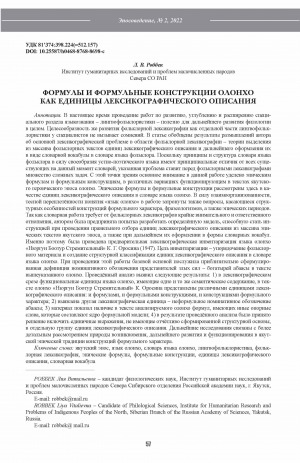
Количество страниц: 10 с.
- Якутский героический эпос Олонхо > Научные труды,
- Общественные науки. Образование > Этнография. Обычаи. Жизнь народа. Нравы,
- Языкознание. Филология. Художественная литература > Языкознание и языки. Лингвистика > Якутский (саха),
- НАУКА ЯКУТИИ > ОБЩЕСТВЕННЫЕ НАУКИ > Этнография. Обычаи. Жизнь народа. Нравы,
- НАУКА ЯКУТИИ > ЯЗЫКОЗНАНИЕ. ФИЛОЛОГИЯ. ЛИТЕРАТУРОВЕДЕНИЕ. ХУДОЖЕСТВЕННАЯ ЛИТЕРАТУРА > Языкознание и языки. Лингвистика.
Роббек, Л. В. Формулы и формульные конструкции олонхо как единицы лексикографического описания / Л. В. Роббек // Вестник Северо-Восточного федерального университета им. М. К. Аммосова. Серия "Эпосоведение" - 2022, N 2 (26). - С. 57-65
DOI: 10.25587/h0468-8768-8698-c

Количество страниц: 2 с.